
What Are Eyelid Skin Lesions?
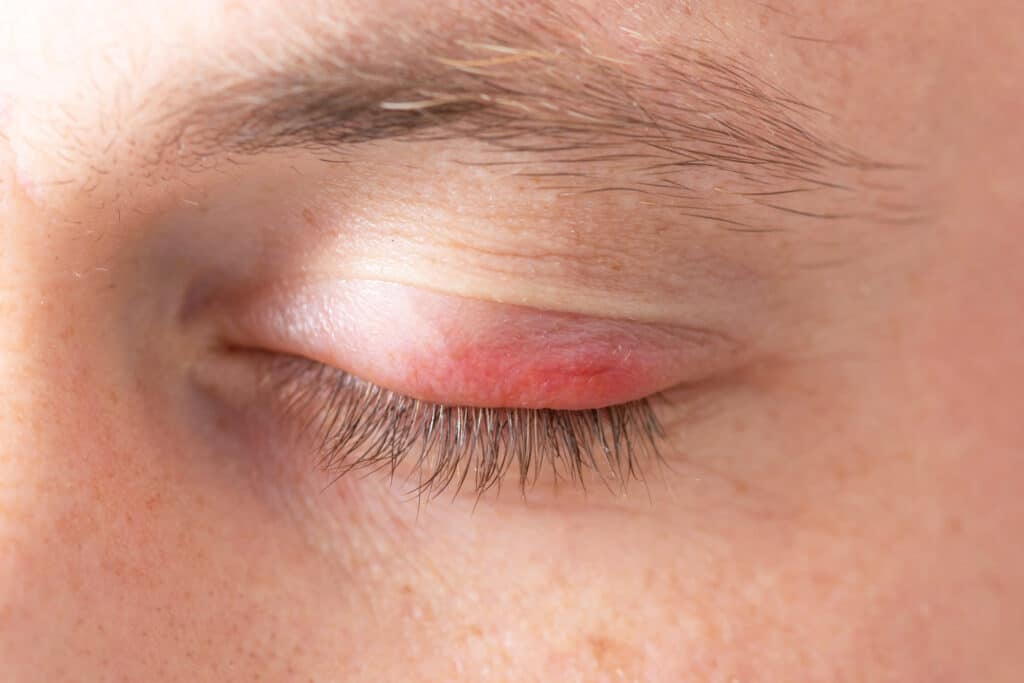
Eyelid skin lesions develop when skin cells in or around the eyelid grow abnormally. These growths can appear as raised or flat bumps, spots, or small masses. Most eyelid lesions are benign (non-cancerous), but it’s important to have Dr. Díaz-Vélez examine any new or changing growth to rule out malignancy.
Eyelid lesions can develop for many reasons, including excessive sun exposure, inflammation, or blocked oil glands. Because the eyelid skin is thin and delicate, even minor changes can be noticeable and uncomfortable.
Some of the most common benign eyelid lesions include:
- Chalazion: Non-infectious eyelid bump caused by a clogged oil gland.
- Stye: Infected bump, typically at the base of the eyelashes.
- Papilloma: Small, wart-like growths that are usually soft and painless.
- Seborrheic keratosis: Brown or tan lesions with a waxy appearance.
- Cysts: Fluid-filled bumps that may fluctuate in size.
- Milia: Tiny white or yellow cysts caused by trapped keratin.
While these are typically harmless, signs such as irregular borders, bleeding, rapid growth, or color changes may warrant further evaluation to rule out skin cancer.
When Should an Eyelid Lesion Be Removed?
- Cosmetic concerns due to appearance or asymmetry
- Irritation or discomfort from rubbing against the eye
- Impaired eyelid function or vision obstruction
- Suspicious lesion needing a biopsy
How Are Eyelid Lesions Evaluated?
What Happens During Eyelid Lesion Removal?
Recovery and Results After Eyelid Lesion Removal
Frequently Asked Questions
Can An Eyelid Lesion Grow Back After Removal?
Some eyelid lesions can recur, depending on the type of growth and its underlying cause. Complete removal may reduce the likelihood of recurrence, but certain cysts, blocked glands, or other benign lesions can develop again.
Dr. Díaz-Vélez can explain what to expect based on the specific type of lesion being treated.
Will Eyelid Lesion Removal Leave A Scar?
Any procedure that removes skin can leave some degree of scarring, but eyelid tissue often heals very well. Dr. Díaz-Vélez uses precise techniques designed to minimize disruption to the surrounding tissue and preserve the natural eyelid contour. Scars typically become less noticeable as healing progresses.
Does Every Eyelid Lesion Need To Be Biopsied?
Not every eyelid lesion requires a biopsy, especially when its appearance is consistent with a common benign growth. If a lesion has suspicious features or the diagnosis is uncertain, Dr. Díaz-Vélez may recommend sending the removed tissue for laboratory analysis.
Pathology results can confirm the diagnosis and help determine whether any additional treatment is needed.